Related Posts Plugin for WordPress, Blogger...
Showing posts with label science and nature. Show all posts

August 13, 2011

Scientist Invented Anti-Date Rape Straw

Two scientists have developed a sensor that can automatically and accurately detect if date-rape drugs are in your drink. All you have to do is dip the straw in your drink and see if it lights up. It's the brainchild of Professor Fernando Patolsky and Doctor Michael Ioffe, both from Tel Aviv University's school of chemistry. Ioffe says:
"The drug itself is reacting with this chemical formulation and the previously clear formula becomes dirty and when the light shines it you can detect it. You don't have to do anything but dip it in your drink."

They haven't decided on the final design of the date rape drug detector (it could be a stirrer instead of a straw) but so far in testing, it's been 100% accurate with no false positives. Anytime they slip a date rape drug inside the drink, the straw detects it. The straw currently detects GHB (gamma-hydroxybutyric acid) and ketamine and will include testing for Rohypnol (roofies) in the near future. With proper funding they hope to become commercially available in a year and a half. If it really works, every bar in every city needs to support this.S

August 9, 2011

A living miracle: Born at 23 weeks Survive!


     Born at 23 weeks and weighing just 1lb 7oz, Charlie Allen was most premature twin at the time of his birth.
He was given a bleak seven per cent chance of survival, but five years on he has defied the odds by growing into a healthy, happy little boy.

'He fit into my palm': Emma gave birth to Charlie at just 23 weeks
     The first-time mother Emma and her then husband Bobby, a carpenter from whom she has since separated, were stunned when she gave birth to Charlie and his brother Jack, who was even smaller at 1lb 4oz, so early into her pregnancy. 

    When Jack died after succumbing to an infection at 11 days old, doctors warned Mr and Mrs Allen that Charlie was facing the same fate and at one point gave him just 12 hours to live. At Norfolk the premature baby born lower than 24 weeks is a hopeless case of surviving and there for the parents are given the choice if they will resuscitate the premature baby. Mrs. Emma Allen didn't loose hope on Charlie and choose the survival of her premature baby despite the other died at Norwich University Hospital. 
    A heart breaking  scene to e a mother that cannot touch her baby because of his skin was so thin and it could tear off. Charlie is so fragile but a fighter.


Charlie has amazed all his doctors and the hospital staff. He was faced with battle after battle from the moment he was born, but he’s overcome them all – he’s a tough little fighter.


 Just 13 weeks after his birth, Charlie suffered a perforation in his stomach caused by medication he was being given to help close a hole in his heart. 

He had to have a major operation to remove blood clots from the healing wound before having a heart operation at 14 weeks to close the duct manually. 

He was 19 weeks old before he could be bottle-fed and it was not until he was 20 weeks, that his mother could hold him properly for the first time.

At five months, although he was still on oxygen, Charlie’s parents were finally allowed to take him to their home in Diss, Norfolk.


Charlie was not allowed to play with other children in case he picked up any illnesses until he came off the oxygen at the age of two. After all the odds Charlie is now healthy.

Only nine per cent of babies born at 23 weeks will ever leave hospital.

July 29, 2011

Glow in the Dark Dog

          Researchers at Seoul National University have announced the creation of a genetically modified, glow-in-the-dark dog. The female beagle, named Tegon, glows fluorescent under ultraviolet light.  What is particularly interesting about Tegon is that the glowing ability is capable of being turned on and off. The drug doxycycline can activate or deactivate the ability to glow. Led by Lee Byeong-chun, the researchers used the same somatic cell nuclear transfer technique to make Tegon glow that was used in 2005 to make the world’s first cloned dog, Snuppy.


 sources: for more info (Reuters)

July 27, 2011

5 Scariest Spider

It gives me a creepy feeling while I'm doing this list. I admit that I am arachnaphobic, Just by looking at them and reading all their data makes my hair raised. I'm trying to conquer this fear for a long time but still cant....

Here's the list of 5 creepy spider


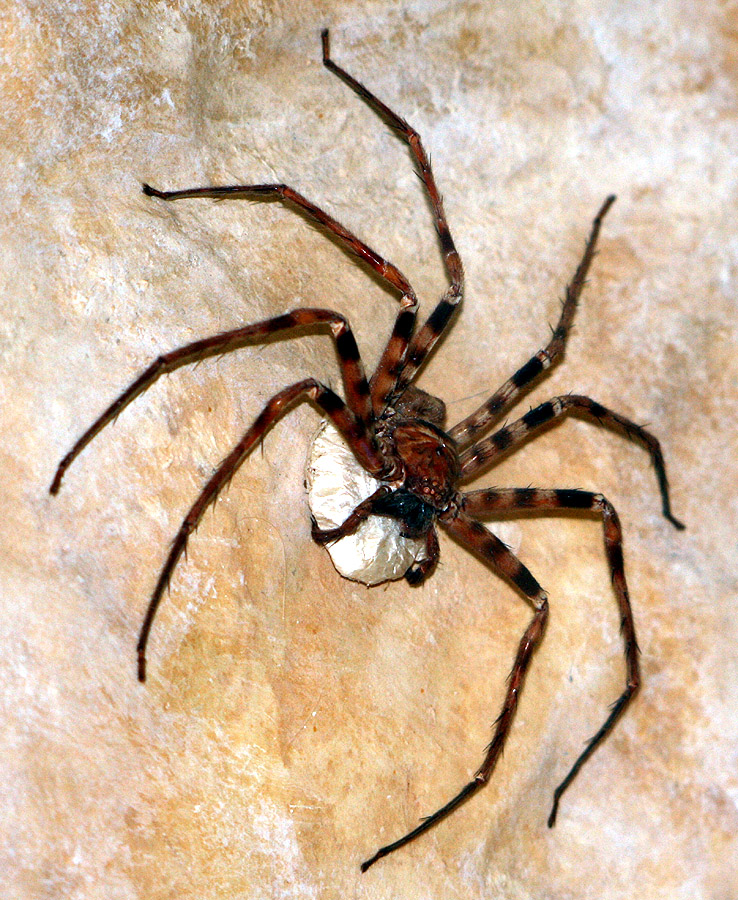
5. The Giant Huntsman Spider

 It is considered the World's largest spider in terms of leg span. Its leg span can reach over 1 foot . The Giant Huntsman spider was discovered in northern part of Laos in 2001. Expert believe that it is a cave dwelling spider because of its pale color.

sources: wikipedia


4. Goliath Bird-eater spider

The scariest spider for me.. Its is the 2nd world's biggest spider but when it comes to mass it is definitely the first. It was named the Goliath Bird-eater Spider is because explorers in the 19th century witnessed it eat a hummingbird. Mostly can be found in the rainforest region of northern South America. Wild Goliath bird-eaters are a deep-burrowing species, found commonly in marshy or swampy areas. The female goliath birdeatere  always mate, but sometimes may end up eating  their mates.

Sources : wikipedia


3. The Brazilian Wandering Spider

     The Brazilian wandering spider is also known as armed spiders or banana spiders . Known as one of the most toxic spider. It is called the Brazilian Wandering Spider because it wanders the jungle floor at night, instead of staying in a web. During the day, the spider can be found in termite mounds, fallen logs and in banana plants. It will also hide in dark and moist places in or near where humans live.

 source: wikipedia


 2. Australian Funnel-web Spider


Australian funnel-web spider are one of the three most dangerous spiders in the world and are regarded by some to be the most dangerous. These spiders are medium-to-large in size, with body lengths ranging from 1 cm to 5 cm (0.4" to 2"). They are darkly coloured, ranging from black to blue-black to plum to brown, with a glossy, hairless carapace covering the front part of the body.


sources: wikipedia


 1. The Black Widow Spider

Also name as Latrodectus. The most venomous spider of genus species. The female black widow's bite is particularly harmful to humans because of its unusually large venom glands; however, Latrodectus bites rarely kill human beings.

sources: wikipedia

avalanchers

Loading...

flagcounter

free counters